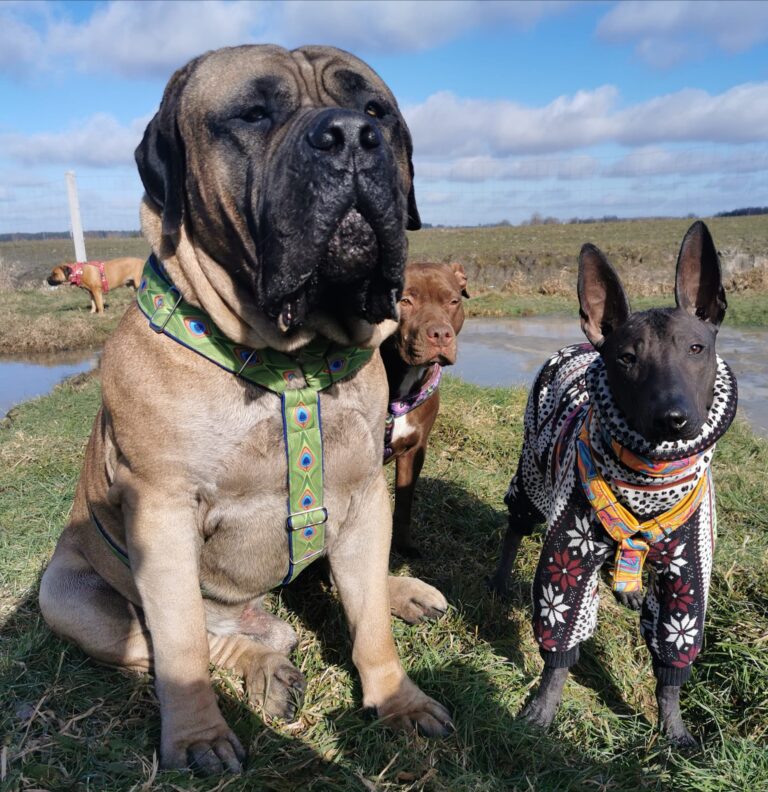

“— Oh, what a lovely dog. May I stroke them?
— NO!
— How nasty!”
Sadly, some people assume someone else’s dog belongs to everyone: neighbours, friends, local children, strangers on walks and other dogs wanting to play.
No, no and no again.
We always advise against letting strangers touch your dog. Dogs dislike unfamiliar people’s touch. When we are assertive enough to refuse it, our dogs trust us more, relax on walks and calmly pass different people.
Sometimes people behave strangely, to put it mildly, on seeing a dog : reaching out, sighing, making kissing noises, whistling, speaking oddly, gushing and running after them…
It is increasingly difficult to explain without being seen as rude or mad. But does someone politely and calmly saying they do not want their dog touched owe an explanation? Of course not.
There may be many reasons for not wanting certain things.
- The dog may have a difficult past and very bad associations with touch.
Do not make things harder. Coping with your presence may already be difficult. - The dog may fear strangers.
Would you want to cause that fear? - The dog may simply dislike it.
Do you like everything? - The dog may be undergoing behavioural therapy, with an owner working hard to help.
Do you want to undo all that?
An owner who does not want their dog touched need not explain the decision individually to everyone. We should respect it.“— What a lovely dog. May I stroke them?
— No!
— You are so unfriendly.
— Friendly or not, at least my dog is happy.”“— What a lovely dog. May I stroke them?
— NO, my dog dislikes strangers!
— But all dogs like me.
— Not all. And that is their right.”“— What a lovely dog. May I stroke them?
— NO, my dog dislikes being stroked!
— But every dog likes stroking.
— No, not every dog.”“— What a lovely dog. May I stroke them?
— NO, my dog still struggles with emotions and jumps!
— I do not mind.
— But I do, because we are working on not jumping.”“— What a lovely dog. May I stroke them?
— NO!
— Ooh, probably aggressive, but I am not afraid.
— Because foolishness knows no limits.”“— What a lovely dog. Zosia, go and stroke them.
— Zosia, keep your hands to yourself!
— Why are you so unfriendly?”“— What lovely dogs. May I stroke them?
— NO, I am walking two dogs and they may get too excited.
— How badly behaved.”
Among the worst are those who do not ask but act immediately.Imagine this.
You are walking with your dog, who follows beautifully on a lead among people, bothering and approaching nobody. From the corner of your eye, like a detective, you notice an odd figure veering towards you. Sunglasses hide their face, making their gaze and intentions difficult to read. No suspicious movement yet, so you continue. You are almost past when, suddenly, hands emerge and, amid excited gushing, the person gives your dog the “Benny Hill” treatment.
How would that person feel walking carefree along the street if a random passer-by suddenly grabbed their lovely curls, squeezed, hugged and kissed them while squealing about their beauty? Probably terrible, just like your dog after that intrusion.
Let us finally stop treating dogs as teddy bears or public toys meant to satisfy every stranger’s wishes. Dogs are living beings who think and feel, not robots to programme for imagined human needs.